







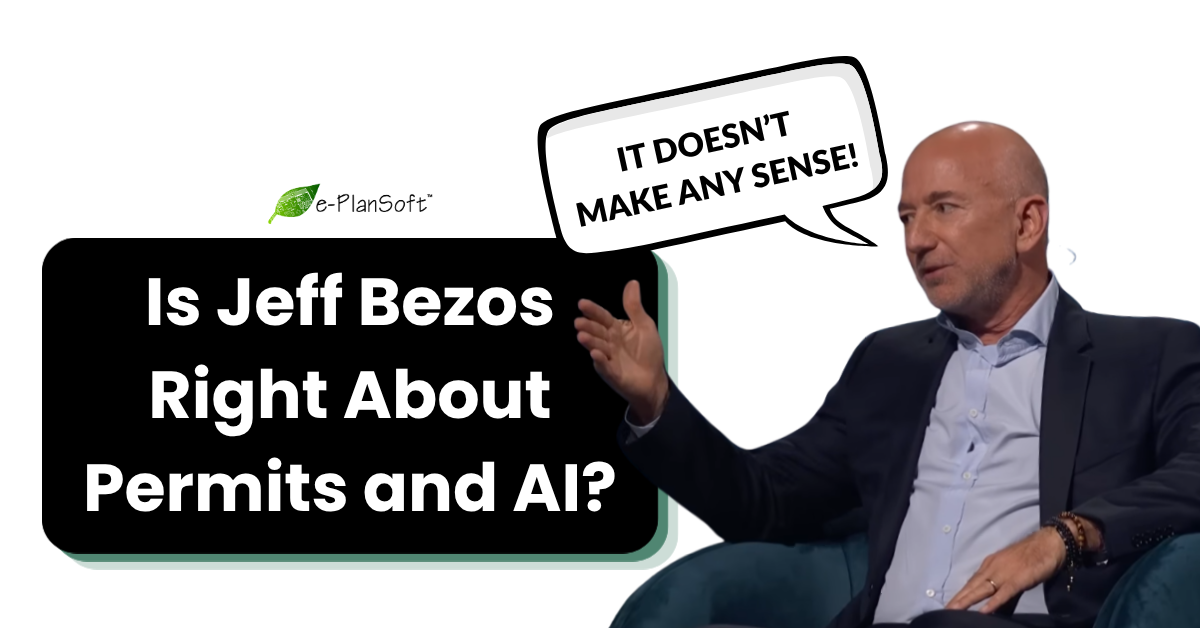
Jeff Bezos thinks AI should be able to approve your building permit in ten seconds.
Feed it your plans, get back a yes or a no — and if it's a no, a list of exactly what to fix.
So why, he asks, does it still take months and months to get a permit approved?
It's a great question. And the idea behind points at the one that really matters: not whether AI belongs in plan review and permitting, but where.
So when we sat down to plan our summer webinar series, we didn't want to open with a data point or a research study. We wanted to open with this clip of Jeff sharing his POV at the American Business Forum. (Watch former Miami Mayor Francis Suarez's face while Jeff is talking.)
Is Jeff Right? ...Sort Of.
Jeff's argument goes like this. The codes that govern permitting should be discrete, measurable, easy-to-apply guidelines for how things get built. And given that, AI should be excellent at comparing those codes against some other file and rendering a decision about whether it meets them or not.
So if that's true — as Jeff asks in the clip — then why does it take months and months and months to get a building permit approved?
Obviously, Mr. Bezos is a smart guy. So the question Matt and I kept coming back to is the obvious one: is he right?
Our take? He's sort of right.
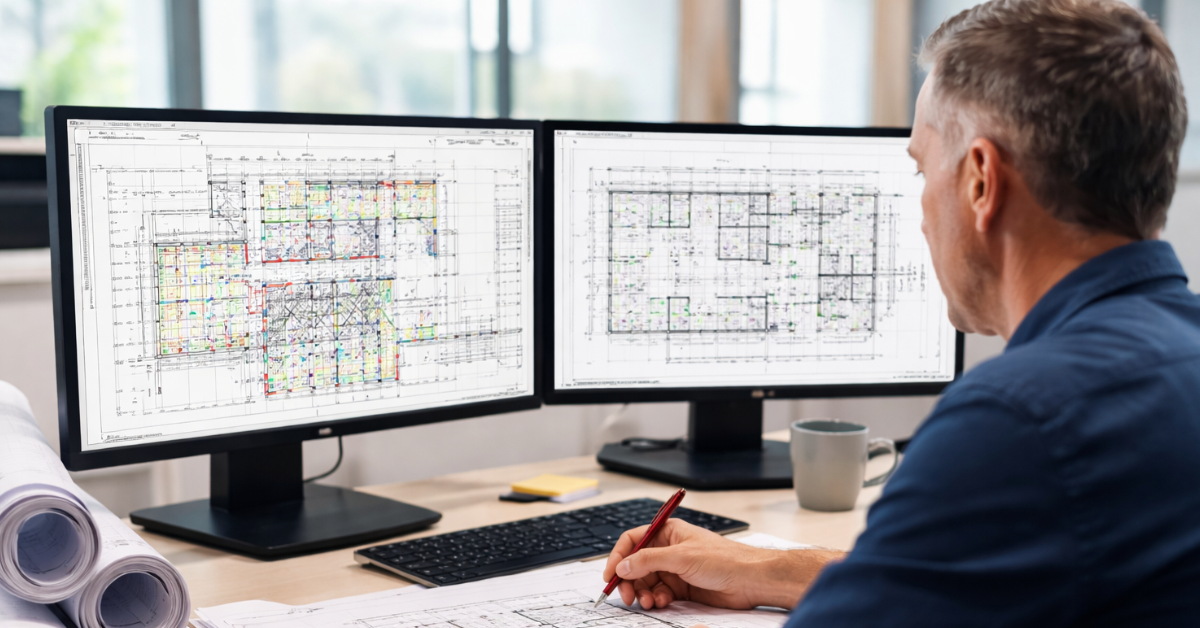
Here's where we agree. A lot of what makes permitting slow — the part applicants are calling and complaining about, the part that buries your team — is the plan review process. Sending in a plan for what you're going to build. Iterating on it. Getting it approved.
Is there a massive opportunity for AI to take time and friction out of that work? Yes. One hundred percent. Too much of it takes far longer than it should today, and the frustration is real.
But here's where it gets more complicated. What Bezos is describing — kick the plan set to AI, hope it approves in ten seconds, and walk away — is not what the realistic version of this ends up looking like.
Here's why. Plan review is a judgment-heavy, high-stakes job. There are thousands of applicable codes out there, and a human has to understand whether each one even applies to the plan in front of them. There's gray area on nearly every page. And the stakes aren't abstract. These are buildings. Structures that have to stand and keep people safe for decades. That's the part the ten-second fantasy leaves out — and it's the part the people who do this work every day will tell you about in the first five minutes.
Jeff is right that the process is broken. He's right that there's a massive role for AI to play. He's just wrong about the shape this eventually takes.
You don't fix plan review by handing it to a machine and hoping for the best.
You fix it by being precise about which parts of the job are a waste of a trained reviewer's time — and which parts are the reason we trust a trained reviewer in the first place.
The question was never "can AI help with this?"
It's "where can AI do the most good?"
Our View on AI in Plan Review
Here's our view that sits underneath everything we're building.
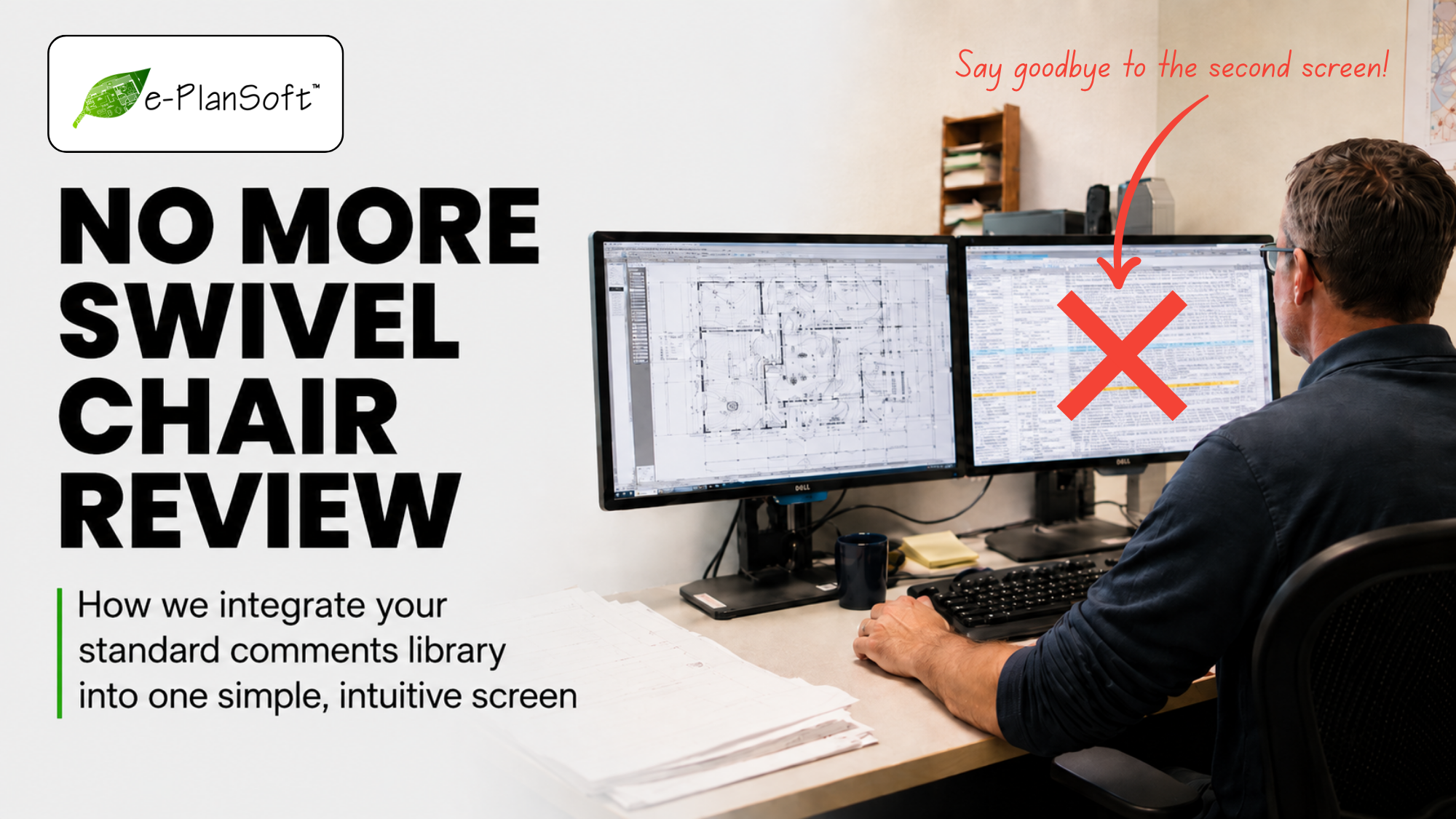
Our goal is not to remove the human judgment from plan review. The complicated calls, the gray area, the "does this code actually apply here" — that's the job, and a reviewer should stay in the center of it. The goal is to remove the waste. The repetitive, low-judgment, swivel-chair work your team is forced to do today before they ever get to make a real decision. The work that slows down approvals. The work that makes this job less sustainable than it should be.
That's the line. AI shouldn't be making the call on its own. AI should be clearing the runway so your reviewers can make the call faster, with less fatigue and fewer chances to miss something.
You can see the philosophy in the product.
Our intake assistant runs a pre-check on what an applicant submits and tells them, in plain language, what's missing or out of compliance before it ever lands on a reviewer's desk.
Our review assistant takes the swivel-chair work — flipping between a code sheet on one screen and a plan set on the other — and pulls it onto one screen, flagging the codes that look most relevant.
Neither one approves anything. Neither one auto-applies a single comment. They hand the reviewer a head start, and the reviewer takes it from there.
That's the whole idea. Not AI instead of your reviewers. AI in service of them.
So no, you don't throw plan review at AI and call it solved. You get thoughtful about exactly where AI belongs — and where the work still demands a human's skill, attention, and judgment. Get that balance right, and you don't just approve permits faster. You make the job better for the people who do it.
Curious about what we're building with AI and how it benefits plan review teams?
Join us for our Summer Webinar Series for insight into our product roadmap and live demos of our AI assistants.
Save your spot at this link - or get in touch if you'd like a personalized demo for your team.

 e-PlanSoft™ Team
 Debra Senra


 Matthew Abbitt