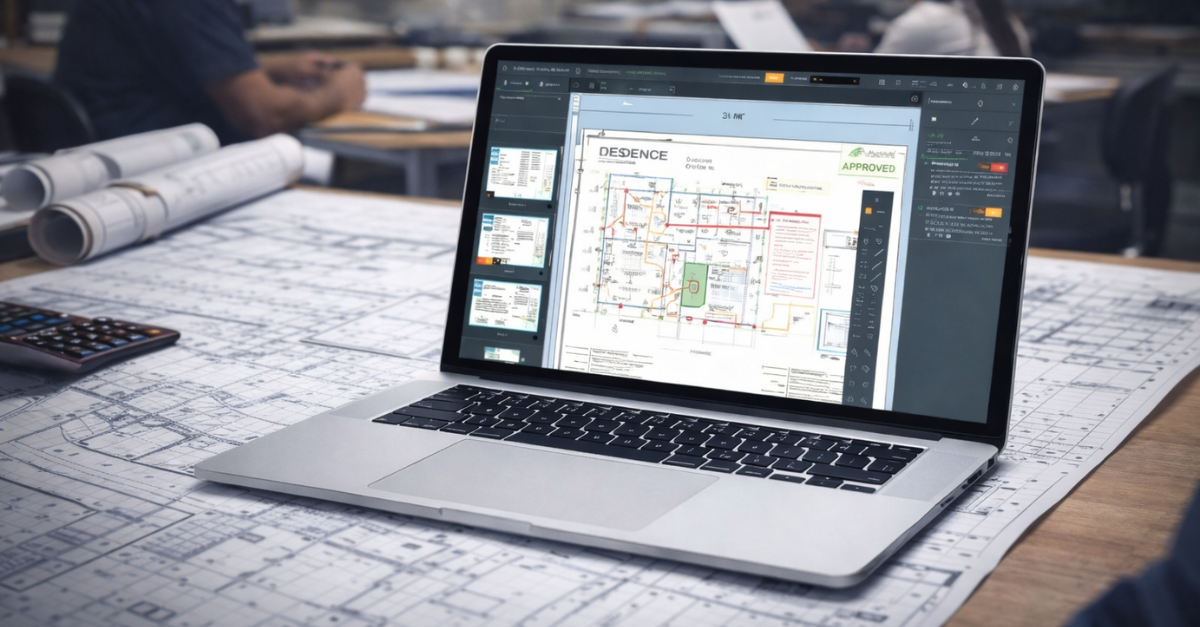
Electronic Plan Reviews are transforming the AEC industry by giving contractors, architects, engineers, and owners access to blueprints as a PDF digital representations in real-time, acting as a powerful tool to enhance project visibility and efficiency across teams. As workers in the industry are becoming more acclimated to doing things online, local governments are slowly adapting to changing technology and are now including technical upgrades into their budgets as an important line item. This gradual online adaptation is coming in the form of implementing twenty-first century applications with electronic workflow and a public-facing portal such as e-PlanSoft’s GoPost and e-PlanREVIEW®, that allow residents or contractor to apply for permits directly with the city, submit documents, pay for, and collaborate with local government staff to perform a variety of processes.
If you were to take a tour of most City or County Building, Planning, or Development Departments, you would see bins or storage areas with rolls of large (24” X 36”) scale drawings (also called blueprints or plans), that support planning, whether its subdivision, rezoning, etc. or permits for new family residential dwellings, room additions, accessory building, etc. documents. With local government agencies receiving hundreds of paper applications each year, the internal motive for moving to an electronic submittal and review environment is evident. Additionally, when take into consideration that the applicant already develops these documents in a Computer Aided Design (CAD) or Building Information Modeling (BIM) system prior to printing, and are also required to submit applications in-person during business hours, the need for simplified online processes is even more pressing for agencies to start moving into.
While moving to an electronic application submittal and review platform may appear pretty straightforward, like any major process and technology change there are several major considerations. Here are three that each agency should look at prior to starting an electronic application submittal and review project.
-
Change to current business processes - Current processes related to application submittal, completeness review, routing to reviewers, consolidation of review comments, and a return of comments and markups to applicants are paper intensive.
-
-
Are current processes designed around paper submittals?
-
Will reviews be simultaneous or sequential? Should this change?
-
How will electronic copies be distributed to reviewers? How about third-party reviewers?
-
How will comments be consolidated and returned to the applicant?
-
Will plans be submitted online and/or in person via USB/CD?
-
-
Change to Current Policies - Current policies are most likely based on a paper plan set being received, routed, and archived. It is very likely that these policies will require updating with a change to electronic submittal and review.
-
Will plans be required to be submitted electronically? For some case types?
-
Will a hard copy plan set still be required?
-
How will final plans be archived?
-
Will an additional fee be charged to offset equipment and hardware costs?
-
Will the fee schedule incentivize electronic submittals?
-
Will staff be required to perform their mark-ups electronically?
-
-
Change to Technology Tools - Drafting tables, light tables, red pens, and rulers are common tools used to support a paper-based environment. Electronic submittal and review will require a different set of tools.
-
-
Does your current planning/permitting system have the tools to support an electronic workflow?
-
What software and hardware tools will staff use to complete their review?
-
Will all reviewers be required to complete their reviews electronically?
-
How will revised plans be provided to an applicant (ie: portal, email, etc)?
-
How will signatures and stamps be applied to electronic plans?
-
How will resubmittals and multiple versions of plans be managed?
-
Transitioning to an electronic plan submittal and review environment may seem overwhelming, but when done correctly the benefits can be significant. Our experienced team of professionals can assist with answering questions related to transitioning to an electronic plan submittal and review environment.

 Debra Senra
 e-PlanSoft™ Team