In the world of building department workflow software, there is a pattern we’ve noticed across agencies of all sizes. When resubmittal cycles skyrocket, the conversation almost always points the finger at the applicant.
The reviewer says the applicant didn't follow instructions. The applicant says the comments were unclear. In reality, the issue often isn't the person—it's the tool (or lack thereof) being used to facilitate the review.
Key takeaway: High resubmittal rates in plan review are often caused by the gap between a reviewer's text-based comment and an applicant's visual interpretation. Switching to markup-anchored commenting reduces cycles by providing direct visual context, eliminating the "translation" errors inherent in traditional Word-doc feedback.
What is the primary cause of high plan review resubmittal cycles?
While applicant negligence is a common complaint, the primary cause of high resubmittal cycles is often fragmented communication. When plan reviewers are forced to describe visual errors using only text in a separate document, critical details get lost in translation. This ambiguity leads to guess-work resubmittals, where applicants misinterpret the fix, leading to a third or fourth review cycle.
The Problem with "Word Doc" Plan Review Feedback
Most electronic plan review efficiency breaks down during the "translation" phase. When your only option is to describe an issue in words—detached from the plan itself—you’re asking the reviewer to perform a difficult dual task:
- Identify the technical issue (e.g., a code violation).
- Translate a visual observation into a text description clear enough for an applicant to find on a 400-page plan set.
This gap is where building permit review delays are born. It isn't a bad reviewer or bad applicant problem. Rather, it’s a tool problem.
How Markup-Anchored Commenting Fixes the Feedback Loop
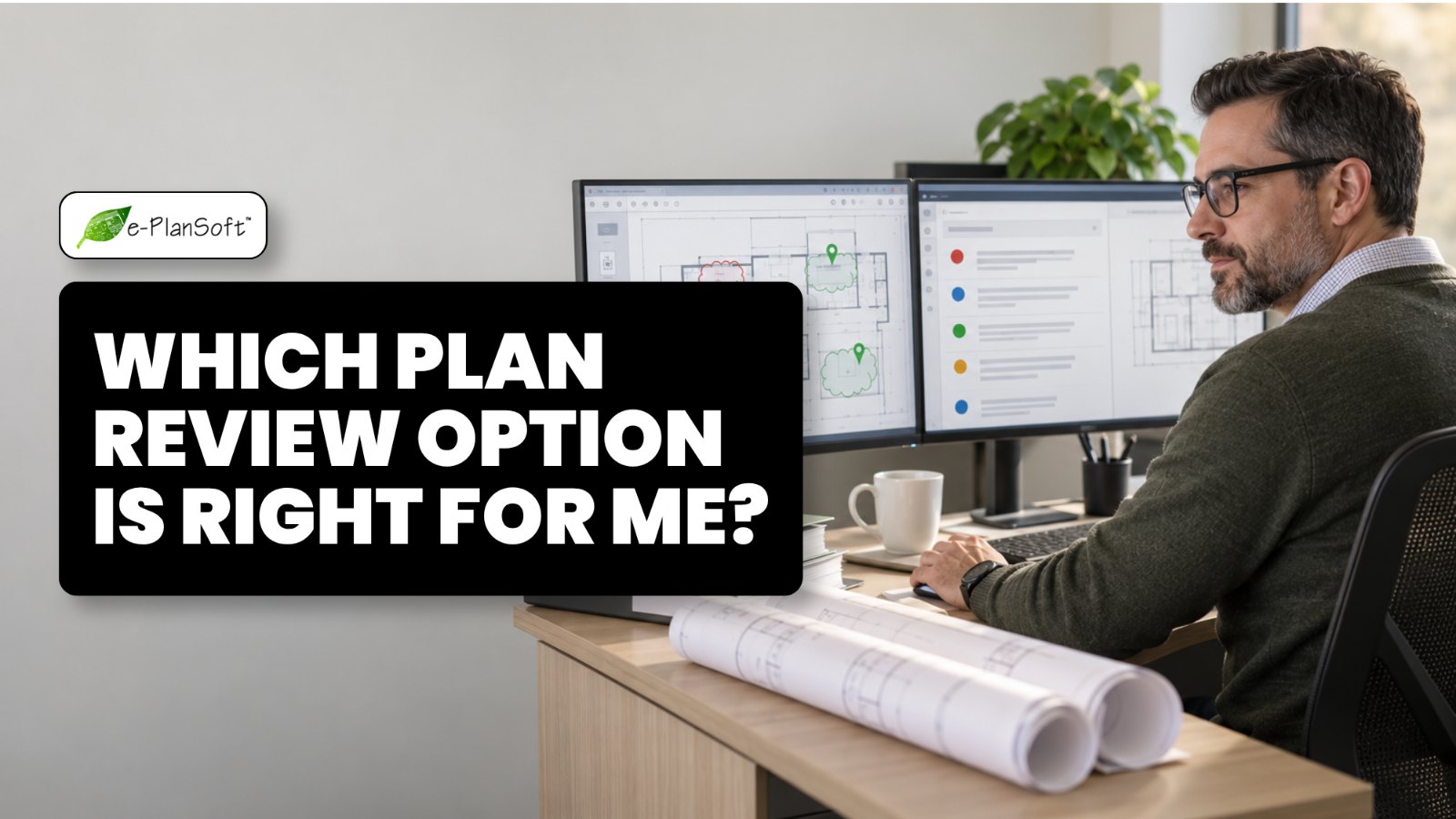
Markup-anchored commenting is a feature of modern digital plan rooms that allows a reviewer to pin a comment directly to a specific coordinate on the drawing.
|
Feature |
Traditional Feedback (Text) |
Markup-Anchored Feedback (Visual) |
|
Clarity |
Ambiguous; relies on text descriptions. |
Immediate; points to the exact door or wall. |
|
Speed |
Slow; applicant must hunt for the location. |
Fast; click the comment to jump to the spot. |
|
Accuracy |
High risk of interpretation error. |
Low risk; visual context is undeniable. |
A comment anchored to the exact location communicates in one second what three sentences of text cannot. By eliminating ambiguity, you standardize your plan review comments and drastically lower your agency’s turnaround times.
Reducing the Hidden Cost of Resubmittals
We’ve seen this play out in real-world reviews. A project often drags into multiple cycles because the feedback loop kept producing just enough noise to generate another round. The reviewers were technically correct, but the delivery method failed.
For leadership looking to optimize budgets, we’ve analyzed the hidden cost of resubmittals in plan review. If your agency is seeing a higher resubmittal rate than expected, it is time to evaluate if your digital plan review tools are part of the problem.
Ready to see markup-anchored commenting in action?
Schedule a demo with our team today.
FAQ: Optimizing Plan Review Communication
How does e-PlanSoft reduce resubmittal cycles?
e-PlanSoft utilizes markup-anchored commenting to keep communication within the plan set, ensuring applicants and reviewers are looking at the same data point simultaneously.
Can I integrate these tools with my current permitting software?
Yes. Modern electronic plan review tools are designed to integrate via API with existing government ERP and permitting systems.

 Debra Senra
 e-PlanSoft™ Team